
Be Ready for the Unexpected: A Big-Picture Checklist
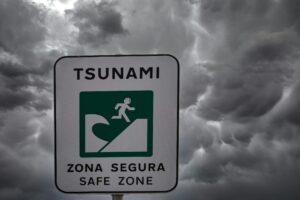 National Preparedness Month is observed every September to encourage individuals, families, and communities to plan for disasters and emergencies.
Sponsored by the Federal Emergency Management Agency (FEMA), this annual campaign emphasizes actionable steps such as understanding local risks, making a family emergency plan, building an emergency supply kit, and getting involved in community preparedness efforts.
Food, water, medicine, and a well-stocked go-bag can help you remain safe in an emergency. But you may still be financially and legally unprepared if your important documents are inaccessible, your insurance coverage does not match the risks you face, or your estate plan is not disaster-ready.
According to national data from 2024, weather and climate disasters have become more frequent, more severe, and more costly. Are you giving emergency preparedness the appropriate amount of attention? A big-picture planning checklist can reveal your readiness for unexpected disruptions to your life, so you are not forced to address them under pressure when it may be too late or too difficult to make changes on the fly.
A Primer on National Preparedness Month
While the word disaster may bring to mind hurricanes, tornadoes, floods, or wildfires, it can also encompass a much wider range of events.
Under the federal disaster declaration system and FEMA’s emergency preparedness guidance, disasters and emergencies may include earthquakes, severe winter storms, droughts, explosions, landslides, public health crises, terrorist attacks, cyberattacks, active shooter incidents, power outages, and other hazards affecting Americans’ homes, businesses, and communities.
National Preparedness Month grew out of the heightened focus on emergency readiness following the September 11, 2001, terrorist attacks. FEMA launched the annual campaign with partner organizations in 2004, and it has since expanded into a nationwide effort.
Five Questions to Ask Yourself During National Preparedness Month
Amid a disaster, you may find yourself facing many questions without ready answers. An emergency is a time to act decisively. The more you think through potential problems ahead of time, the better prepared you and your family will be to respond in ways that keep everyone safe.
FEMA reminds us that disaster preparedness begins at home and provides a checklist of four key actions that everyone should take to prepare for potential disasters and emergencies where they live. FEMA’s location-based resources can also help you identify disaster risks and preparedness information specific to your area.
Be Ready for the Unexpected: A Big-Picture Checklist
- Are your important documents somewhere safe? Financial records, deeds, insurance policies, and legal documents should be protected from fire, water damage, theft, and other physical risks. Original paper copies may need to be stored in a fire-resistant, waterproof safe or at a secure location away from your home, such as a bank safe deposit box, an attorney’s office, or the home of a trusted person in a different area.
- Are your estate planning documents up-to-date? Wills, trusts, powers of attorney, and healthcare directives should be current in case an emergency forces your plan into action. Outdated documents can create confusion or delay when someone needs to act during a disaster.
- Does someone else know where to find them? To be usable, estate and financial plans must be locatable. Provide family members, fiduciaries, and trusted contacts with instructions for finding and accessing documents where they are stored.
- Is your insurance adequate for the risks you face? Review whether your current coverage and policy limits are sufficient for the risks in your area, including current rebuilding costs and exclusions for hazards such as flooding or earthquakes.
- Have you explored policy riders that could further protect you? Endorsements or riders may help address gaps and other risks not fully covered by a standard policy, such as sewer or water backup, high-value personal property, business interruption, or work equipment.
Each of these questions, if left unresolved, can compound an emergency and complicate your response. Because disasters often strike suddenly and leave little time to act, the federal government and FEMA stress preparation. You should do the same with your plans and your family.
You Have More Control Than You Think
The time to address disaster preparedness is before an emergency occurs—not amid the heightened pressure of an earthquake, storm, or fire evacuation but in the relative calm of your home or advisor’s office.
It can be easy to assume that a serious disaster will not happen to you. It may not have happened yet. And it may never happen. But with incidents such as floods and fires on the rise, and one national survey estimating that more than 3 million US adults—about one in 70—were displaced from their homes by a natural disaster in the preceding year, that type of risk should not be dismissed out of hand. Doing so can be catastrophic in its own right.
Disasters may be unpredictable, but being prepared for one is entirely within your control. If you answered “no” to any of the questions on the checklist, an estate planning attorney can help you come up with answers now, before disaster strikes and you are left wondering what to do mid-emergency.
How to Protect Your Legal Documents in a Natural Disaster
Legal documents can feel abstract when nobody immediately needs them or you have never used them, in much the same way that the risk of a wildfire, hurricane, or other emergency can feel remote until you experience one firsthand.
Suddenly, the stakes are real, a plan is put to the test, and documents such as an insurance policy, a power of attorney, or an account record can become essential after sitting untouched for years.
To prepare for that possibility, you should adopt a “not if, but when” mindset that lets you take control, even in the uncertainty of a disaster, by understanding the risks, making a plan, and protecting critical records.
Being prepared can help your family survive a natural disaster, but if your documents do not survive along with you, it may be harder to put the pieces of your life back together after the dust settles.
Document Checklist
The Federal Emergency Management Agency’s (FEMA’s) preparedness process involves safeguarding documents, information, and valuables, including the following:
- Documents that identify individuals and household members: birth and marriage certificates, adoption records, and child custody papers
- Financial and legal records: housing and vehicle documents, financial account information, insurance policies, and estate planning documents
- Medical information: health insurance records, medical powers of attorney, medication information, and physician contacts
- Household contacts: employers, schools, social service providers, and home repair services
- Valuables and personal items: priceless mementos, keepsakes, and other belongings that may be difficult or impossible to replace
It is not enough to simply have this information and these items. You need to be able to access them at a moment’s notice, and they should be protected against the same conditions that could force an evacuation.
FEMA recommends that key financial, legal, and contact information be
- stored as paper copies at home in a fireproof and waterproof box or safe, in a bank safe deposit box, or with a trusted friend or relative and
- stored electronically in a password-protected format on a flash drive or external hard drive kept in a fireproof and waterproof container, or through a secure cloud-based service.
- Confirm that digital backups exist. Ensure that your critical documents have been scanned and stored through a secure, password-protected cloud service or other protected digital system.
- Create a home inventory record. Photograph or record the contents of your home and store the file with your other protected digital records. A detailed inventory can help document property and support insurance or disaster assistance claims.
- Establish plan access. Documents are of limited use during an emergency if they are locked away or nobody can find them. Give fiduciaries, designated family members, and trusted contacts clear instructions on how to access physical documents and digital copies.
- Verify physical storage. Protect original documents in a fireproof, waterproof safe, and keep secondary copies in a separate location.
- Review your document go-bag. A sudden evacuation can leave little time to search through files. Keep a portable, protected set of essential records, including identification, Social Security cards, estate planning documents, insurance information, financial account details, and medication records.
After a Disaster: Recover and Reassess
- Prioritize replacement of damaged or missing documents. Begin with the records you are most likely to need right away, including identification, property records, insurance policies, and estate planning documents.
- Locate tax and financial records. Determine where prior returns, account statements, property records, and cost-basis information are stored. Your accountant, attorney, financial institutions, or other professionals may also have copies.
- Apply for disaster assistance when available. If the event receives a federal disaster declaration, determine whether you qualify for assistance and what records are needed to document your identity, income, residence, and losses.
- Conduct a postdisaster planning review. Treat the recovery period as a real-world test of your plan. Did the disaster expose problems with your estate plan, insurance coverage, emergency liquidity, or broader financial plan?
- Reassess authority, access, and contact information. Consider how well fiduciary appointments, account permissions, document access instructions, and emergency contacts worked during the crisis, and make updates where needed.
For the Best Recovery, Plan for the Worst
Emergencies do not wait until you are ready. Although many natural disasters follow predictable seasonal patterns, there is no telling exactly when and where they may strike.
A plan is only as strong as its weakest link. If important documents are missing, outdated, or inaccessible, information gaps can make a bad situation worse and turn temporary setbacks into prolonged crises.
Your plan’s effectiveness may be revealed only at the final hour, but preparing it for action now by asking questions, testing assumptions, and thinking through possible consequences is the document equivalent of conducting an emergency drill.
The conversations that you have with an estate planning attorney now can prove both forward-looking and far-reaching when disaster strikes, setting you up to act faster and recover more effectively. Contact us today to further discuss how we can help you feel more prepared for the future.
Emergency Preparedness When Your Parent Is in a Nursing Home
The decision to place a parent in a nursing home or assisted living facility is rarely simple. It can feel even more fraught in hindsight when something goes wrong.
Careful research and frequent check-ins can help keep a parent safe and secure in their new residence, as can preparing for a disaster that could trigger rapid, high-stakes legal and financial decisions.
A disaster plan may begin at home, but it should also account for parents and other family members who live elsewhere and may depend on you during an emergency.
Eaton Fire Shows the Reality of Senior-Care Evacuations
When the Eaton Fire ripped through Altadena and Pasadena, California, in January 2025, approximately 850 patients and residents were evacuated from nursing homes, assisted-living facilities, and group homes across the Los Angeles area.
The evacuation of The Terraces at Park Marino, an assisted-living and memory-care facility in Pasadena that was later destroyed, showed how quickly a facility’s emergency plan can come under pressure.
As the power failed and smoke filled the building, staff moved residents downstairs and out into the street. First responders directed them to a nearby parking lot, which became a temporary staging area while they waited for buses and ambulances to transport them to safer locations.
The scramble also exposed how easily vulnerable residents can be lost in the shuffle. State investigators later cited the facility after finding that at least one wheelchair user had been left in her third-floor room after staff had reported that the building was clear. A concerned family member alerted authorities, prompting firefighters to return and rescue her.
For adult children of displaced residents, learning that a parent has survived an emergency may be just the beginning. They may also need to know where the parent was taken, who can approve care or transfer, whether long-term care insurance will cover temporary placement, and how immediate costs will be paid.
Such questions can arise while you are still trying to locate and communicate with a parent displaced by a disaster. The Eaton Fire is a stark reminder that families need their own strategy for a parent’s evacuation and continued care rather than simply trusting that the facility has a plan.
Know the Facility’s Emergency Plan
Federal emergency preparedness rules require Medicare- and Medicaid-participating senior-care facilities to plan for issues such as evacuation, sheltering in place, resident tracking, communication, and continuity of care.
However, you should not assume that the existence of a written plan guarantees a smooth response. A regional disaster can strain transportation, communications, staffing, and receiving facilities past their breaking points.
You can learn more about a facility’s actual plan by asking the following questions:
- Under what circumstances would the facility shelter in place rather than evacuate?
- Where will evacuated residents be taken?
- Does the facility have primary and backup relocation sites?
- How will residents be transported and tracked?
- How will families receive updates if power or cellphone service is disrupted?
In addition to asking questions, request a copy of the facility’s plan, which can then become part of your family’s evacuation plan so that a vulnerable loved one is not overlooked in the chaos.
Have Authority and Documents Ready
A parent’s evacuation can force decisions that go well beyond the facility’s immediate response. The proper authorities and documents must be in place before an evacuation order is issued.
- Review the scope of authority. An estate planning attorney can confirm whether the documents authorize the decisions a displacement may require, including arranging care, approving a transfer, accessing funds, or entering into a new facility agreement.
- Confirm that essential documents are up-to-date and in place. Ensure that your parent’s healthcare and financial powers of attorney, insurance information, identification records, and other critical documents, such as a medication list, are current, accessible, and available to whomever may need them.
- Build an emergency contact list together. Include direct contact information for the facility’s director, long-term care ombudsman, long-term care insurer, attorney, accountant, and other resources.
Prepare for Payment and Access Issues
Parental displacement can create financial issues before insurance, benefits, or regular payment arrangements catch up.
- Review long-term care insurance. Understand how your parent’s policy treats temporary relocation, facility closure, alternate care settings, waiting periods, and reimbursement requirements.
- Ask about Medicaid and facility-specific rules. Bed-hold and temporary-absence policies can vary by state and facility. Find out how an evacuation or transfer could affect your parent’s placement and benefits before making independent arrangements.
- Maintain accessible funds. Temporary placement, transportation, medical supplies, or private-pay care may require payment before insurance or other benefits respond.
- Document out-of-pocket costs immediately. Preserve receipts and records for transportation, temporary care, medical supplies, lodging, and other emergency expenses.
- Review your financial plan. Consider how the event affects cash flow, emergency reserves, retirement goals, or your ability to contribute toward your parent’s care.
Know Your Rights
Nursing home residents have rights, and their authorized representatives can help protect those rights. If your parent has authorized you to participate in their care or you are serving as their legal representative, you may be involved in developing a care plan and making certain decisions on their behalf.
The facility’s communication procedures should also explain how residents and their representatives will be notified during an emergency, where evacuated residents are being relocated, and how families can obtain updates after communication has been restored.
Ensure that the facility correctly identifies you in its records and has current contact information and copies of any documents that establish your authority. If you have questions about preparing your estate plan for a disaster or about understanding your role and authority when a parent lives in a care facility, we are here to help you get to higher legal ground.
